
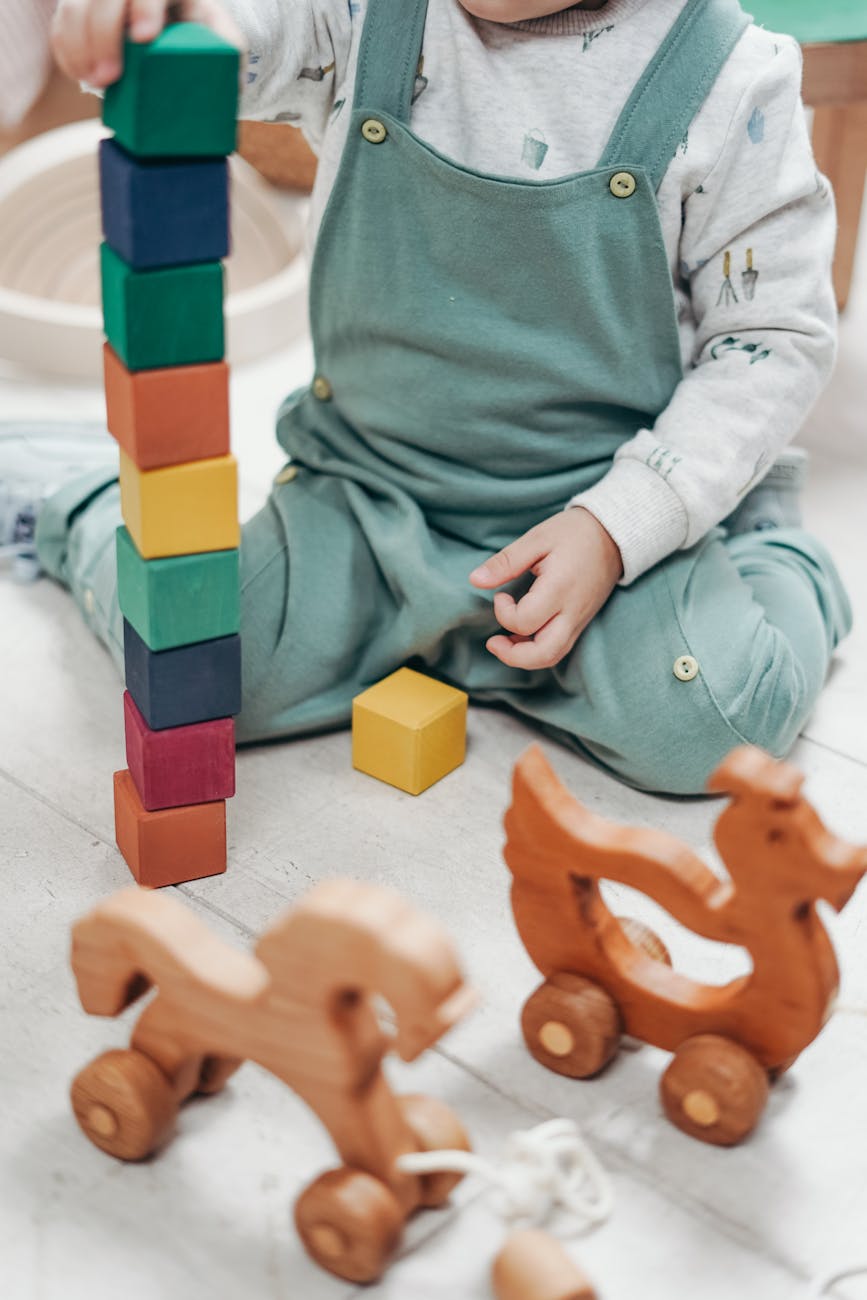
Fine motor skills are essential for your toddler’s overall development, as they help them perform everyday tasks like feeding themselves, dressing, and drawing. These skills involve the small muscles in the hands and fingers and are crucial for activities requiring precision and control. Encouraging fine motor development at this stage is important, and there are plenty of fun ways to support it.
What Are Fine Motor Skills?
Fine motor skills involve movements that require small muscle control, primarily in the hands, fingers, and wrists. Some early examples of fine motor skills in toddlers include gripping objects, stacking blocks, and starting to use utensils. As your toddler’s fine motor skills improve, they will be able to perform more complex tasks like holding a pencil, buttoning clothes, or building with smaller blocks.
How to Encourage Fine Motor Skills in Toddlers:
- Provide Simple Puzzles:
Puzzles are a great way to encourage your toddler’s hand-eye coordination and problem-solving skills. Look for puzzles with large pieces that are easy to grasp and fit together. As your toddler gets more proficient, you can introduce more complex puzzles to challenge them further. - Engage in Craft Time:
Activities like coloring, drawing, and playing with playdough are excellent for building fine motor skills. Offer crayons, markers, and safe scissors (with supervision) for activities that encourage hand control and dexterity. Playdough is particularly great because it allows toddlers to practice squeezing, rolling, and pinching, which strengthens hand muscles. - Use Everyday Items:
Encourage your toddler to use tools like spoons, forks, and cups during meal times. Simple tasks like stirring, pouring, or scooping are great for improving hand-eye coordination and grasping skills. These activities also help your child develop independence. - Stacking and Building:
Building toys like blocks or stacking cups are fantastic for strengthening fine motor skills. As your toddler stacks blocks or arranges cups, they are practicing precision and hand control. You can gradually introduce smaller objects for them to stack as they grow more adept at handling larger pieces. - Encourage Dressing Skills:
Toddlers love to imitate adults, and simple tasks like putting on socks, buttoning shirts, or zipping up jackets are great opportunities for them to practice fine motor skills. Start with loose-fitting clothes and guide them through the process of dressing themselves. This encourages both hand-eye coordination and independence.
Why Fine Motor Skills Matter:
Fine motor skills are vital for your toddler’s overall cognitive and physical development. Mastering these skills helps them gain independence, improve self-confidence, and take on new challenges. Additionally, strong fine motor skills are essential for success in later learning, such as writing and typing.
By providing opportunities for your toddler to practice and develop these skills in fun, hands-on ways, you’re setting them up for success as they continue to grow and explore the world around them. Encourage them with patience and praise, and soon you’ll see their fine motor skills soar!
Please check out my recent blog posts on my Favorite Fine Motor Toys for Toddlers and my Favorite Fine Motor Toys for Preschoolers!
Leave a Reply